
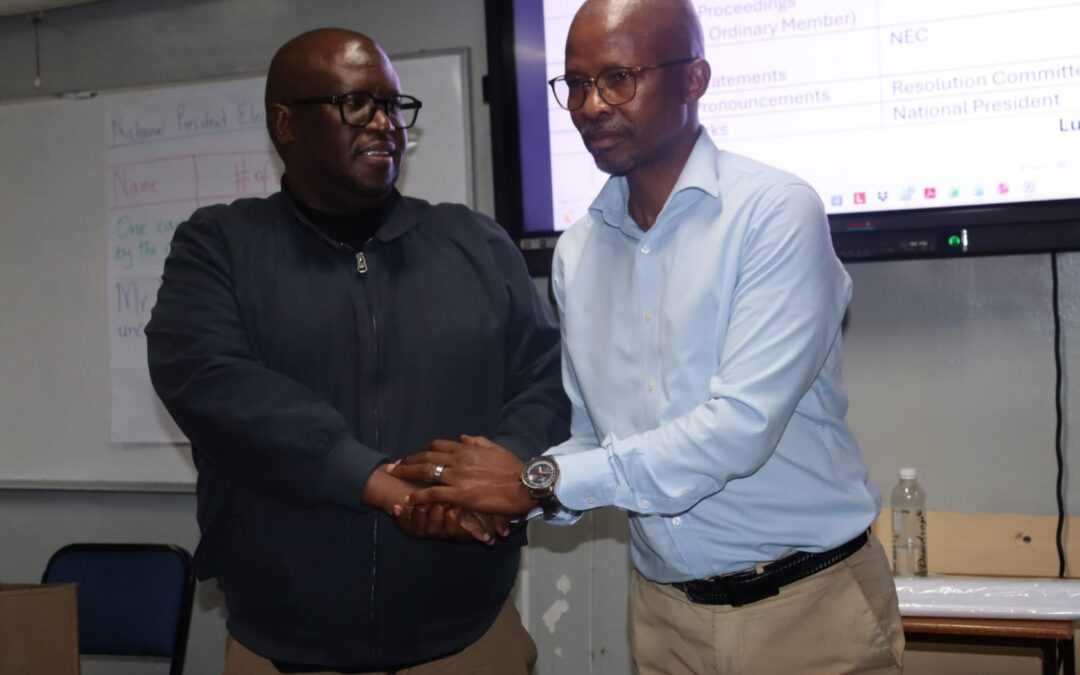
Maseru, Lesotho – 29 August 2026, Mr. Ts’eliso Lesenya from Maseru District has been elected President of the Lesotho Red Cross Society (LRCS), unopposed, succeeding Mr. Hareteke Nkhet’se, as the Society concluded its Annual General Assembly (AGA) in Maseru.
The Assembly, which commenced on 28 August 2026, brought together representatives from all 10 districts of Lesotho, with each district represented by three members. It provided a platform for members to review the Society’s work, deliberate on key organisational matters and chart a way forward for strengthening the National Society.
In addition to the election of Mr. Lesenya, Mrs. Makhahliso Masheane from Mokhotlong was elected as an Ordinary Member of the National Executive Committee (NEC), filling the position previously held by the late Mr. Teboho Magumela.
Lesenya calls for stronger governance and unity
Following his election, President Lesenya expressed gratitude to members for the confidence they had placed in him and called for unity and collective responsibility in addressing the challenges facing the Society.
He acknowledged that the LRCS is facing financial challenges, which require collective attention and decisive action.
He noted that the Annual General Assembly will need to reconvene to consider the audit report and revisit the Constitution of the Lesotho Red Cross Society. He stressed that good governance, transparency and accountability must remain central to the Society’s operations.
President Lesenya encouraged representatives to return to their respective divisions and share the outcomes of the Assembly with members across the country.
He commended participants for their commitment and the work accomplished during the two-day gathering, calling on members to recognise the effort made towards ensuring the success of the Assembly.
Strengthening Resource Mobilisation and Partnerships
President Lesenya called for a stronger focus on resource mobilisation and self-reliance, stressing that the LRCS should make better use of resources available within Lesotho and reduce its dependence on external donors. He challenged the Society to move beyond being primarily a recipient of assistance and work towards becoming an organisation that is increasingly able to mobilise resources and contribute solutions.
He called on Senior Branch Development Officers and other structures to identify available resources, develop quality proposals, build partnerships and actively pursue opportunities for resource mobilisation.
The President also called for the revival and strengthening of strategic relationships with institutions such as the British High Commission, as well as the resuscitation of relations with sister National Societies.
The LRCS’s upcoming 60th anniversary was identified as an important opportunity to celebrate the Society’s history while strengthening relationships and mobilising resources for its future. President Lesenya called for a clear and properly resourced plan for the anniversary and emphasised the importance of inviting patrons, partners and other key stakeholders to strengthen relationships and create opportunities for resource mobilisation.
Tackling Hunger, Poverty and Humanitarian Challenges
The President highlighted hunger and poverty as major challenges requiring greater attention and called for innovative, youth-led initiatives to contribute to addressing food insecurity. He encouraged the development of projects that empower young people to become part of the solution and help Lesotho move from being a recipient of assistance to a country that increasingly contributes and develops its own solutions.
He called on the LRCS to align such initiatives with the Society’s Strategic Plan and to identify practical ways of using the resources that Lesotho already has. “We should take charge to make the difference,” was the central message of his call for greater ownership and self-reliance.
Humanitarian Diplomacy and Emergency Preparedness
President Lesenya also called for stronger joint efforts in humanitarian diplomacy, emphasising the need for strategic engagement with government, the health sector, diplomatic missions, sister National Societies and other partners.
He reaffirmed the LRCS commitment to water diplomacy, noting that commitments made through engagement with the International Federation of Red Cross and Red Crescent Societies (IFRC) would be followed through.
He expressed appreciation to the IFRC for its continued support and called for sustained cooperation as the LRCS works towards achieving its National Society goals.
On emergency preparedness, President Lesenya called for regular evaluation of the Society’s readiness to respond to shocks and emergencies.
He stressed the importance of making better use of the Emergency Center to improve coordination and engagement, while strengthening partnerships with the health sector in emergency situations.
He further called for improved anticipation and preparedness for future shocks and emergencies, including ensuring the protection and assistance of Basotho who may require humanitarian support, whether within the country or in the diaspora.
Recognising Volunteers and Partners
The Assembly also recognised individuals and organisations that contributed to the work of the LRCS during 2025. Nineteen volunteers received awards for Best Performing Volunteers, recognising their dedication and contribution to humanitarian activities.

In addition, six corporate partners were recognised for their support to the Society and their contribution towards advancing its humanitarian mission.
The recognition highlighted the important role of volunteers and partners in enabling the LRCS to reach vulnerable communities across Lesotho.
Distinguished Guests
The Assembly was attended by distinguished guests, including Mr. Mpane Nthunya, former District Administrator for Maseru, and Mr. Shadrack Musyoka, National Society Development and Financial Sustainability Coordinator at the IFRC. The Society also welcomed Dr. Moteane, a former President of the Lesotho Red Cross Society, who attended as a guest speaker and shared his experience and insights with participants.
A New Chapter for LRCS
As the Assembly concluded, President Lesenya called on members, volunteers, staff and partners to work together to build a stronger and more sustainable National Society.
He expressed appreciation to outgoing President Mr. Hareteke Nkhet’se for his dedicated service and contribution to the LRCS and extended his willingness to continue supporting the Society as it pursues its National Society goals. He also welcomed the newly elected members of the NEC, noting that their experience and perspectives would add value to the leadership of the Society, while emphasising that unity would be essential to achieving meaningful progress.
President Lesenya called on members to return to the roots and founding purpose of the Lesotho Red Cross Society, serving humanity, fighting poverty, responding to disasters and protecting and supporting vulnerable communities.
As the LRCS approaches its 60th anniversary, the new leadership has called for a renewed focus on strengthening governance, mobilising local resources, deepening strategic partnerships, improving emergency preparedness and ensuring that the Society remains responsive to the needs of communities.
The LRCS congratulates Mr. Ts’eliso Lesenya on his election as President and Mrs. Makhahliso Masheane on her election to the National Executive Committee, while expressing sincere appreciation to Mr. Hareteke Nkhet’se for his dedicated service.
“The new chapter begins with a clear call to action: let us take charge, work together, mobilise what we have, strengthen our National Society and make a meaningful difference in the lives of vulnerable peo