by Boitumelo Sekotlo | Sep 4, 2026 | Latest
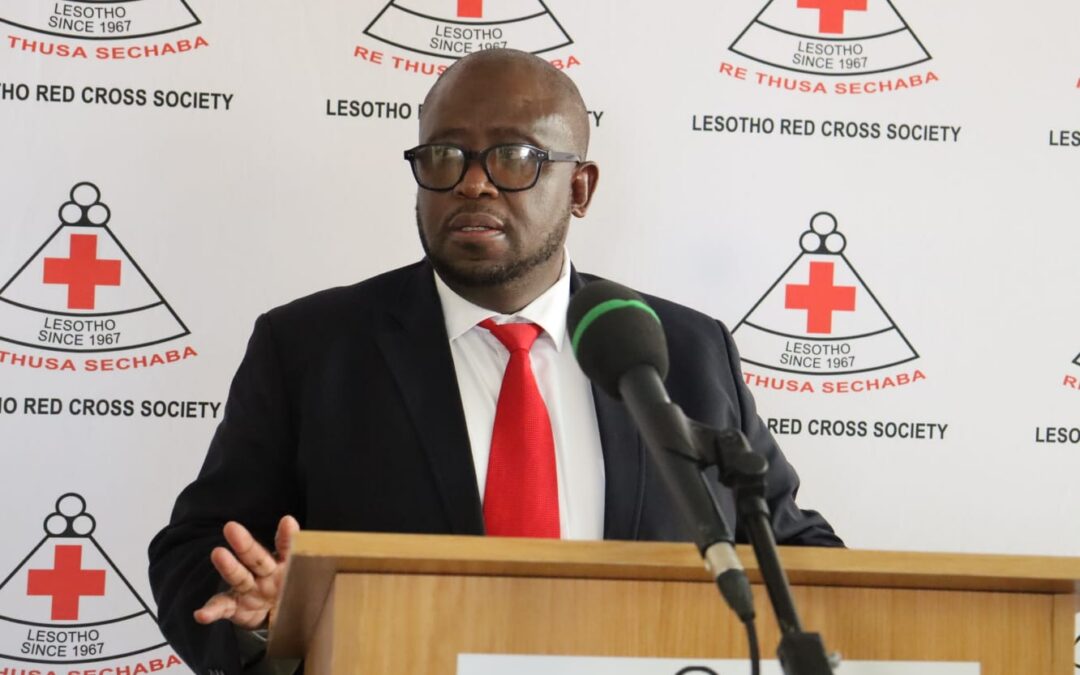
Mr. Tseliso Steven Lesenya is a senior public-sector executive, governance practitioner and international relations specialist from the Kingdom of Lesotho, with more than two decades of progressive leadership experience spanning central and local government, public-sector reform, democratic governance, international relations, humanitarian affairs and institutional development. He currently serves as Deputy Principal Secretary in the Office of the Prime Minister of the Kingdom of Lesotho, where he provides strategic executive leadership and coordination at the centre of government, supporting the implementation of national priorities and strengthening institutional performance, accountability and delivery.
Mr. Lesenya has previously served at the level of Principal Secretary and Chief Accounting Officer, providing executive leadership over Government Ministries and overseeing policy implementation, financial and administrative management, institutional reform and public-sector modernisation. During this period, he led initiatives in digitisation, organisational restructuring and performance-based reform, while managing strategic partnerships with international development institutions including the World Bank, UNDP, European Union and Commonwealth. He also introduced and supervised the national biometric civil service census, contributing to payroll rationalisation and wider public-service reform.
His professional experience is complemented by extensive engagement in democratic governance and continental policy processes. He serves as a National Governance Expert to the African Peer Review Mechanism (APRM) of the African Union (AU), providing technical and policy expertise on governance, democracy, constitutional order and institutional resilience. His work has included national consultations and policy analysis concerning unconstitutional changes of government, governance reform and democratic institutions, as well as facilitating dialogue among Government, Civil Society and Regional stakeholders.
Mr. Lesenya is also a National Coordinator and International Relations Specialist for the Small States Research Programme at the University of Westminster in the United Kingdom, where he contributes to research and policy dialogue on small-state diplomacy, foreign policy, governance and Lesotho’s geopolitical position. His academic and professional interests include small-state strategy, humanitarian and water diplomacy, crisis governance, public-sector transformation, economic diplomacy, climate resilience and African integration.
His leadership experience also extends to local governance, risk analysis and community resilience. Between 2005 and 2015, he held executive management responsibilities within community and District Councils, overseeing decentralised governance, local development planning, infrastructure, water supply, food security and community programmes. He also led disaster-response coordination and resilience initiatives and worked closely with government Ministries, Development Partners and Traditional Authorities.
Mr. Lesenya has maintained a strong commitment to institutional governance and public service beyond his formal government responsibilities. His leadership and professional service have included roles on the Lesotho Specified Pension Fund, the Disaster Management Authority (co-opted on DMA Board during COVID-19), the Office of the Prime Minister Integrity Committee, and the Lesotho Red Cross Society, Maseru Division (where he has engaged in humanitarian affairs and crisis governance). He has also served in professional and youth leadership capacities and is involved in mentorship and leadership development.
A Chevening Scholar, Mr. Lesenya holds a master’s degree in international relations and Democratic Politics from the University of Westminster, awarded with Merit, as well as degrees in Political Science (Honours specialising in International Relations) and International Relations and History from the University of the Free State and the University of the Witwatersrand respectively. His professional development includes the AAPAM/Chandler Strong Nations Programme and international programmes in crisis management, governance, democratic development and public administration.
He is also an author and policy contributor, with publications and research covering governance, Lesotho’s foreign policy, small-state diplomacy, great-power geopolitics, security-sector governance, artificial intelligence, economic diplomacy and crisis governance. His work has contributed to national and continental policy discourse, and he regularly engages as a commentator on governance and international affairs.
Mr. Lesenya brings together high-level government experience, governance expertise, international policy engagement and a practical understanding of humanitarian and community resilience challenges. His professional outlook is grounded in the principles of accountable leadership, institutional integrity, partnership, service to communities and the strengthening of systems that enable societies to withstand and recover from crises.
He is particularly interested in advancing a more strategic role for humanitarian institutions in crisis preparedness and response, climate resilience, water and humanitarian diplomacy, youth development, food and nutrition security, and sustainable institutional development—areas that connect national development priorities with the humanitarian mission of the Red Cross and Red Crescent Movement.
by Boitumelo Sekotlo | Sep 2, 2026 | Latest
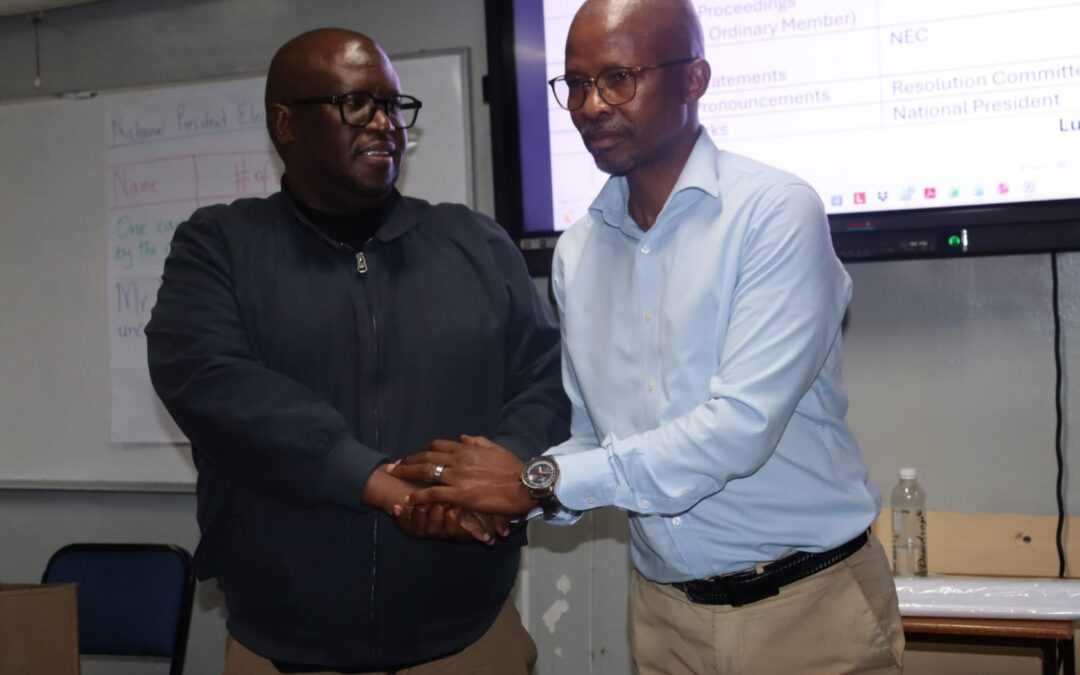
Maseru, Lesotho – 29 August 2026, Mr. Ts’eliso Lesenya from Maseru District has been elected President of the Lesotho Red Cross Society (LRCS), unopposed, succeeding Mr. Hareteke Nkhet’se, as the Society concluded its Annual General Assembly (AGA) in Maseru.
The Assembly, which commenced on 28 August 2026, brought together representatives from all 10 districts of Lesotho, with each district represented by three members. It provided a platform for members to review the Society’s work, deliberate on key organisational matters and chart a way forward for strengthening the National Society.
In addition to the election of Mr. Lesenya, Mrs. Makhahliso Masheane from Mokhotlong was elected as an Ordinary Member of the National Executive Committee (NEC), filling the position previously held by the late Mr. Teboho Magumela.
Lesenya calls for stronger governance and unity
Following his election, President Lesenya expressed gratitude to members for the confidence they had placed in him and called for unity and collective responsibility in addressing the challenges facing the Society.
He acknowledged that the LRCS is facing financial challenges, which require collective attention and decisive action.
He noted that the Annual General Assembly will need to reconvene to consider the audit report and revisit the Constitution of the Lesotho Red Cross Society. He stressed that good governance, transparency and accountability must remain central to the Society’s operations.
President Lesenya encouraged representatives to return to their respective divisions and share the outcomes of the Assembly with members across the country.
He commended participants for their commitment and the work accomplished during the two-day gathering, calling on members to recognise the effort made towards ensuring the success of the Assembly.
Strengthening Resource Mobilisation and Partnerships
President Lesenya called for a stronger focus on resource mobilisation and self-reliance, stressing that the LRCS should make better use of resources available within Lesotho and reduce its dependence on external donors. He challenged the Society to move beyond being primarily a recipient of assistance and work towards becoming an organisation that is increasingly able to mobilise resources and contribute solutions.
He called on Senior Branch Development Officers and other structures to identify available resources, develop quality proposals, build partnerships and actively pursue opportunities for resource mobilisation.
The President also called for the revival and strengthening of strategic relationships with institutions such as the British High Commission, as well as the resuscitation of relations with sister National Societies.
The LRCS’s upcoming 60th anniversary was identified as an important opportunity to celebrate the Society’s history while strengthening relationships and mobilising resources for its future. President Lesenya called for a clear and properly resourced plan for the anniversary and emphasised the importance of inviting patrons, partners and other key stakeholders to strengthen relationships and create opportunities for resource mobilisation.
Tackling Hunger, Poverty and Humanitarian Challenges
The President highlighted hunger and poverty as major challenges requiring greater attention and called for innovative, youth-led initiatives to contribute to addressing food insecurity. He encouraged the development of projects that empower young people to become part of the solution and help Lesotho move from being a recipient of assistance to a country that increasingly contributes and develops its own solutions.
He called on the LRCS to align such initiatives with the Society’s Strategic Plan and to identify practical ways of using the resources that Lesotho already has. “We should take charge to make the difference,” was the central message of his call for greater ownership and self-reliance.
Humanitarian Diplomacy and Emergency Preparedness
President Lesenya also called for stronger joint efforts in humanitarian diplomacy, emphasising the need for strategic engagement with government, the health sector, diplomatic missions, sister National Societies and other partners.
He reaffirmed the LRCS commitment to water diplomacy, noting that commitments made through engagement with the International Federation of Red Cross and Red Crescent Societies (IFRC) would be followed through.
He expressed appreciation to the IFRC for its continued support and called for sustained cooperation as the LRCS works towards achieving its National Society goals.
On emergency preparedness, President Lesenya called for regular evaluation of the Society’s readiness to respond to shocks and emergencies.
He stressed the importance of making better use of the Emergency Center to improve coordination and engagement, while strengthening partnerships with the health sector in emergency situations.
He further called for improved anticipation and preparedness for future shocks and emergencies, including ensuring the protection and assistance of Basotho who may require humanitarian support, whether within the country or in the diaspora.
Recognising Volunteers and Partners
The Assembly also recognised individuals and organisations that contributed to the work of the LRCS during 2025. Nineteen volunteers received awards for Best Performing Volunteers, recognising their dedication and contribution to humanitarian activities.

In addition, six corporate partners were recognised for their support to the Society and their contribution towards advancing its humanitarian mission.
The recognition highlighted the important role of volunteers and partners in enabling the LRCS to reach vulnerable communities across Lesotho.
Distinguished Guests
The Assembly was attended by distinguished guests, including Mr. Mpane Nthunya, former District Administrator for Maseru, and Mr. Shadrack Musyoka, National Society Development and Financial Sustainability Coordinator at the IFRC. The Society also welcomed Dr. Moteane, a former President of the Lesotho Red Cross Society, who attended as a guest speaker and shared his experience and insights with participants.
A New Chapter for LRCS
As the Assembly concluded, President Lesenya called on members, volunteers, staff and partners to work together to build a stronger and more sustainable National Society.
He expressed appreciation to outgoing President Mr. Hareteke Nkhet’se for his dedicated service and contribution to the LRCS and extended his willingness to continue supporting the Society as it pursues its National Society goals. He also welcomed the newly elected members of the NEC, noting that their experience and perspectives would add value to the leadership of the Society, while emphasising that unity would be essential to achieving meaningful progress.
President Lesenya called on members to return to the roots and founding purpose of the Lesotho Red Cross Society, serving humanity, fighting poverty, responding to disasters and protecting and supporting vulnerable communities.
As the LRCS approaches its 60th anniversary, the new leadership has called for a renewed focus on strengthening governance, mobilising local resources, deepening strategic partnerships, improving emergency preparedness and ensuring that the Society remains responsive to the needs of communities.
The LRCS congratulates Mr. Ts’eliso Lesenya on his election as President and Mrs. Makhahliso Masheane on her election to the National Executive Committee, while expressing sincere appreciation to Mr. Hareteke Nkhet’se for his dedicated service.
“The new chapter begins with a clear call to action: let us take charge, work together, mobilise what we have, strengthen our National Society and make a meaningful difference in the lives of vulnerable peo
by Boitumelo Sekotlo | Jul 23, 2026 | Latest
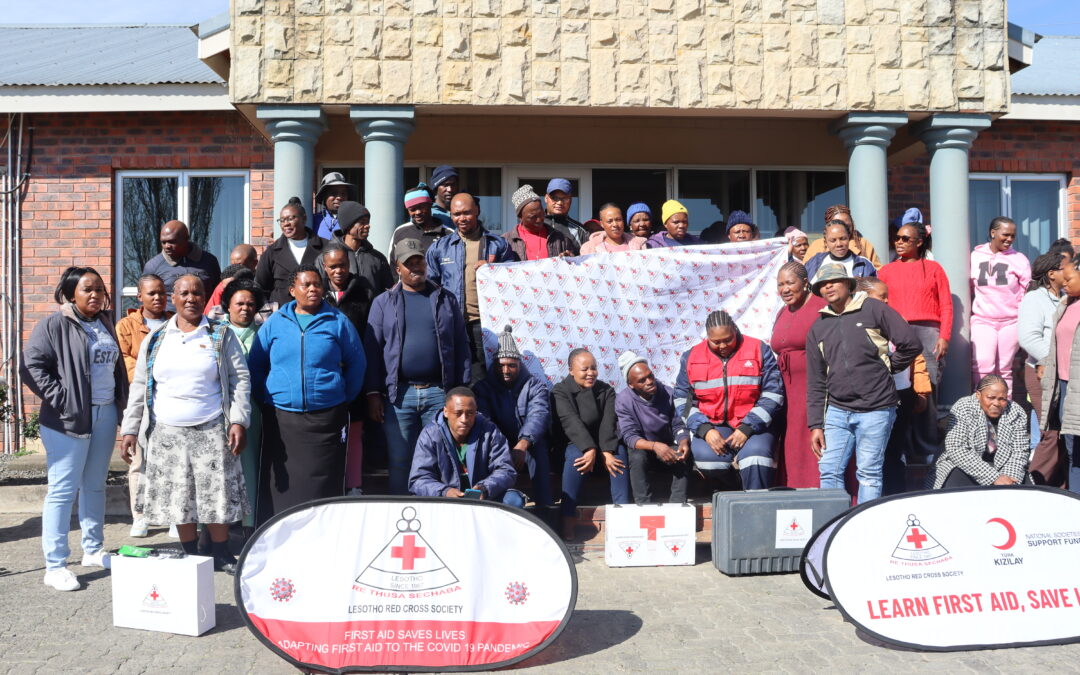
The Lesotho Red Cross Society (LRCS), on 21 July 2026, conducted a First Aid awareness session for workers involved in wool classing and record keeping at wool and mohair shearing sheds. The session aimed to equip participants with essential knowledge and practical skills in accident prevention and emergency response.
The awareness session covered a range of life-saving topics, including controlling severe bleeding, managing fractures, treating burns, responding to seizures, and other essential First Aid techniques.
During the session, the growing need for First Aid training in shearing sheds across the country was highlighted. It was noted that many people still rely on outdated and unsafe methods when responding to emergencies, particularly burn injuries. This underscored the importance of equipping workers with the knowledge and skills to provide appropriate First Aid before professional medical assistance arrives.

The session brought together 43 participants from 21 shearing sheds in the Maseru District. Participants included wool classers and record keepers responsible for ensuring quality control and maintaining livestock records during shearing operations. Of those who attended, 19 were men and 24 were women, including 8 youth.
The programme was organized by the Ministry of Agriculture in collaboration with the Lesotho National Wool and Mohair Association (LNWMA). The LRCS facilitated the First Aid awareness session as part of its ongoing efforts to promote safer working environments and strengthen emergency preparedness in different setups.
Speaking on behalf of the LNWMA, District Marketing Officer Ms. Basetsana Thabana expressed appreciation to the LRCS for facilitating the session. She said the association had identified a gap in First Aid knowledge among workers and recognized the importance of equipping them with skills that contribute to a safer and healthier working environment.
Sharing her experience after the training, Mrs. Ts’epang Mamokhethi Makoa, Shed Supervisor at Semione Shearing Shed, said the training had given her the confidence to respond effectively during emergencies, both at work and at home.
“This training is very important because I am now able to assist my children whenever an emergency arises. I also learned that, as first aiders, our responsibility is to provide immediate care and preserve life until professional medical help arrives. We are not responsible for determining whether someone is dead, that is the responsibility of medical professionals.”
She added that the training had corrected many misconceptions about First Aid.
“I realized that I had been using outdated methods, such as applying salt, soil and methylated spirits to stop bleeding. I now understand the correct First Aid procedures. I encourage everyone to receive First Aid training, whether in the workplace, in communities, or in schools, because these are life-saving skills that everyone should have.”
The LRCS First Aid Trainer, Ms. Paballo Thatho, emphasized that increasing the number of trained first aiders would help reduce preventable injuries and deaths.
“If more people are trained in First Aid and equipped with the right skills, many lives can be saved and the severity of injuries can be reduced. There are many people who work in environments where emergencies are likely to occur or where they interact with large numbers of people, such as taxi drivers.”
She further explained that well-intentioned first responders sometimes cause more harm because they lack proper training.
“Many deaths and serious injuries occur because people try to help without knowing the correct First Aid procedures. In some cases, improper handling of an injured person can result in paralysis or even death. This is why proper First Aid training is so important.”
The LRCS remains committed to promoting a culture of safety and preparedness by empowering communities and workplaces with life-saving First Aid knowledge and skills.
by Boitumelo Sekotlo | Jun 7, 2026 | Latest
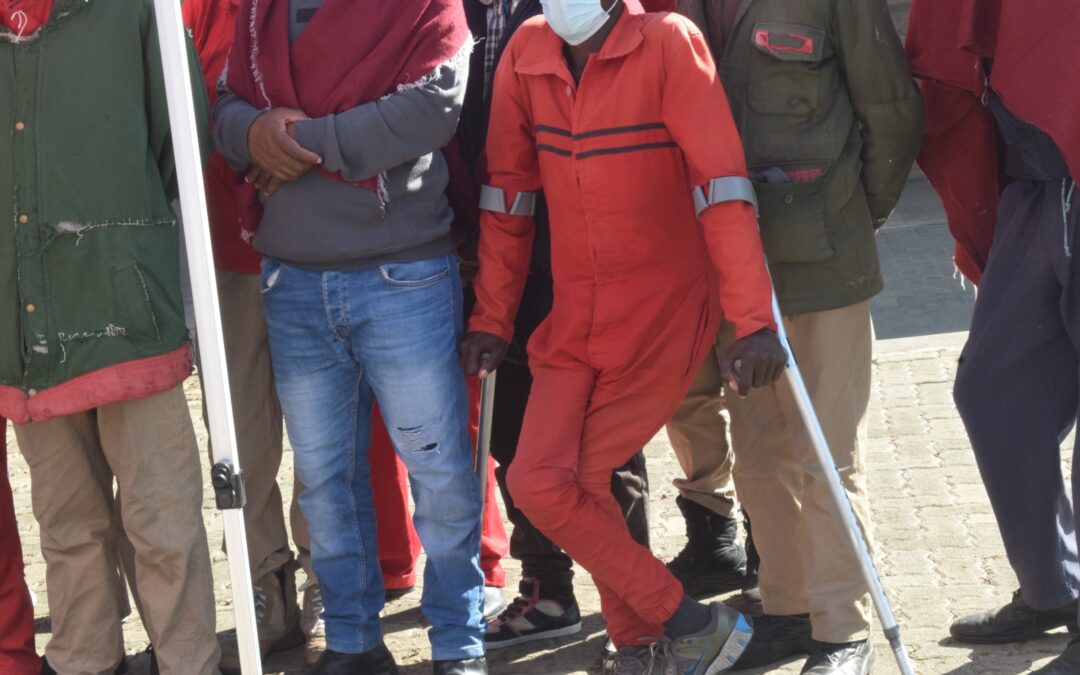
Maseru, Lesotho – 28 May 2026, Lesotho Red Cross Society (LRCS), through its Restoring Family Links (RFL) Programme, conducted a humanitarian visit to Maseru Central Prison on 28 May 2026.
During the visit, LRCS distributed hygiene kits to vulnerable inmates identified in collaboration with the Lesotho Correctional Service. The kits contained essential personal hygiene items, including toothpaste, toothbrushes, roll-on deodorant, body lotion, and face towels. These items are intended to promote personal hygiene, health, and dignity among inmates.
In addition to the hygiene support, LRCS provided vegetable seeds to encourage winter gardening within the correctional facility. The initiative aims to enhance food production, promote self-sufficiency, and contribute to the nutritional well-being of inmates through sustainable gardening practices.
Speaking on the importance of the initiative, Mr. Sechaba Mokhameleli, Secretary General of the Lesotho Red Cross Society, explained that at the Lesotho Red Cross Society, they believe that every person deserves to be treated with dignity, regardless of their circumstances.
“Through the provision of hygiene kits and support for food production, we are helping to improve the well-being of vulnerable inmates while reinforcing our commitment to humanity and compassion. Small acts of support can make a meaningful difference in restoring hope and dignity,” he said.
Speaking during the handover ceremony, Deputy District Commissioner Leluma Mahlelebe expressed his appreciation to the Lesotho Red Cross Society for the support provided to the correctional facility.
“We are grateful to the Lesotho Red Cross Society for this timely and meaningful donation. The hygiene kits will contribute to improving the well-being and dignity of inmates, while the seeds will play a significant role in strengthening our food production efforts. Given the challenges we face in providing adequate food for the growing inmate population, this support will go a long way in supplementing our resources and enhancing food security within the facility,” he said.
The activity forms part of the Society’s humanitarian efforts to address the needs of vulnerable populations and uphold the dignity of individuals in places of detention. By providing practical support and fostering opportunities for food production, LRCS continues to contribute to improving the living conditions and well-being of inmates.
The Lesotho Red Cross Society extends its appreciation to the Lesotho Correctional Service for its cooperation and support in facilitating the successful implementation of the activity.
Through initiatives such as these, LRCS remains committed to its humanitarian mission of alleviating suffering, protecting human dignity, and providing assistance to those most in need.
by Boitumelo Sekotlo | Mar 26, 2026 | Latest
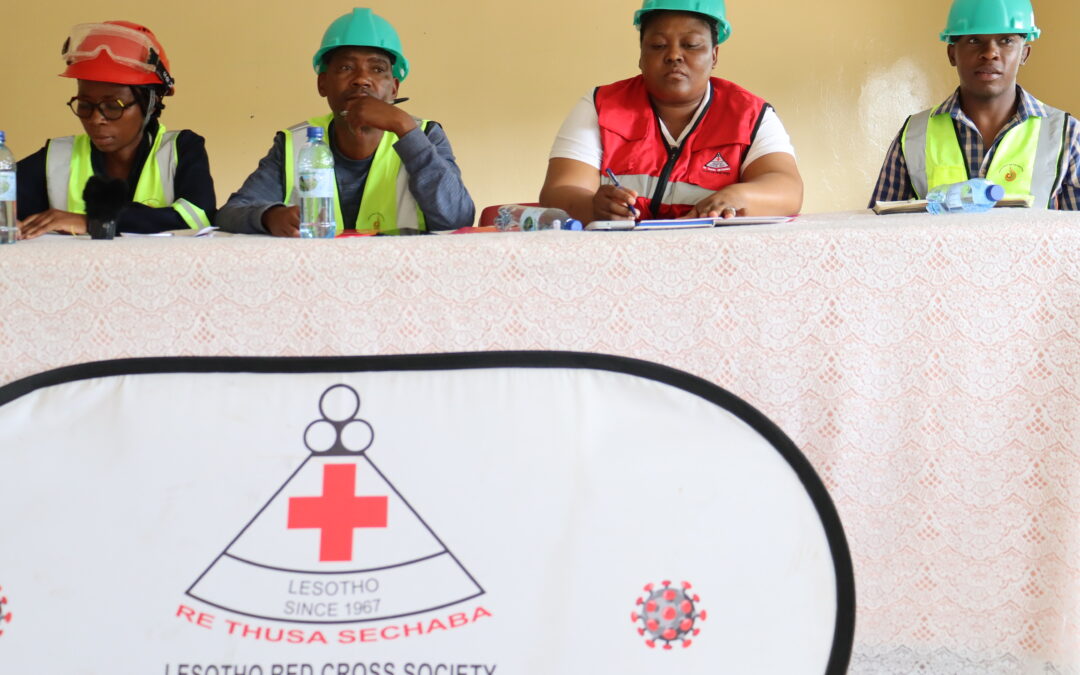
The Lesotho Red Cross Society (LRCS) has partnered with Eagles Fire and Safety Protection and the Road Safety Health Shield Organization to strengthen emergency response capacity in the country. The initiative, unveiled at a press conference held at the Correctional Training Centre, focuses on providing first aid and fire safety training for taxi and mini-bus drivers, who are often the first on the scene in road accidents.
Mr. Molefe Ratsoane, Public Relations Officer for Eagles Fire and Safety Protection, emphasized that taxi drivers carry thousands of lives daily. Training them in first aid and fire response will enable them to save lives that might otherwise be lost in accidents. He referenced tragic incidents, including a car accident in Kolonyama and a school bus fire at Lakeside, to highlight the urgent need for such interventions.
On the other hand, Mr. Atang Molefinyane, Chairperson of the Road Safety Health Shield Organization, explained that the program will cover both first aid and fire safety. He noted that other than that, many drivers struggle to access health services due to time constraints and financial pressures, underscoring the need for tailored support. This was revealed by the research they undertook as an organization. The partnership will secure funds, design strategic plans, and implement training that directly addresses drivers’ needs.
Mr. Nordeen Goolam from Eagles’ training department stressed practical safety measures, urging drivers to avoid smoking in vehicles, ensure proper wiring, and keep fire extinguishers mounted within reach rather than locked in the boot. He emphasized that careless driving and lack of preparedness often turn accidents into fatal tragedies.
On the other hand, Ms. Paballo Thatho, First Aid Training Officer at LRCS, highlighted the importance of First Aid kits in every car. She explained that proper training ensures that first aid helps rather than worsens a situation. LRCS will provide certified training and motorist first aid kits to drivers who successfully complete the program.
Representatives of taxi associations voiced strong support for the initiative. Ntate Letsie suggested that first aid and fire safety training should be integrated into traffic law, making it a requirement before obtaining a driver’s license.
This partnership marks a significant step toward reducing fatalities from road accidents in Lesotho. By empowering taxi drivers with essential emergency response skills, LRCS and its partners aim to build a safer transport system and protect lives across the nation.

by Boitumelo Sekotlo | Mar 6, 2026 | Divisions, Latest
Quthing, 28 February 2026 — The Lesotho Red Cross Society (LRCS), working alongside Disaster Management Authority (DMA), and the Ministry of Social Development (MSD) has extended humanitarian support to a family devastated by a landslide in Mphojoa area at Ha Motsapi Village.
The disaster claimed the lives of two young boys, aged 8 and 6, after a huge rock rolled into their home, demolishing the house.
Following a rapid assessment, LRCS, DMA, MSD provided the bereaved household with food packages, cooking utensils, clothing and food for a newborn baby, as well as bedding.
The intervention was particularly urgent as the boys’ mother, who was heavily pregnant at the time of the incident, was also affected.
According to Mr. Maphoma Mosaola, Senior Branch Development Officer for Quthing, the assessment team endured a four-hour walk to reach the remote village, using a South African route due to the absence of road and bridge access after heavy rains washed away the local bridge.
“The heavily pregnant mother was taken to hospital where she gave birth, hence the assistance of newborn clothes and food by the Lesotho Red Cross Society,” he explained.
Mr. Mosaola further noted that the family had no alternative housing at the time and was later relocated to a nearby village with the assistance of the area chief.
Area Chief Mabakoena Motsapi shared harrowing details of the incident, explaining that the younger child was still alive when he was pulled from the demolished house.
Chief Motsapi noted that the child’s survival chances were dashed by the collapse of a nearby footbridge, which delayed urgent rescue efforts.
“Had it not been for the collapsed footbridge, the child’s life would have been saved,” he said.
The chief’s remarks have underscored the devastating impact of infrastructure challenges in rural communities, where collapsed bridges and unsafe structures can turn accidents into tragedies.
Mr. Vuyani Blayi, head of the bereaved family, expressed his anguish, saying he still struggles to comprehend the tragedy. Speaking with deep sorrow, Mr. Blayi said,
“I still cannot believe that I lost two children at the same time. It would have been better if they had fallen sick, because then I would have taken care of them, rather than losing two healthy children at once.”
The burial of the two boys is scheduled for 14 March 2026.
Through this intervention, LRCS reaffirmed its commitment to supporting vulnerable families during emergencies, ensuring that immediate needs are met while communities begin the process of recovery.

